Deepfakes vs. Authenticity: The Future of Video News
By HoqueAI.TV Editorial Team | August 2025
Introduction
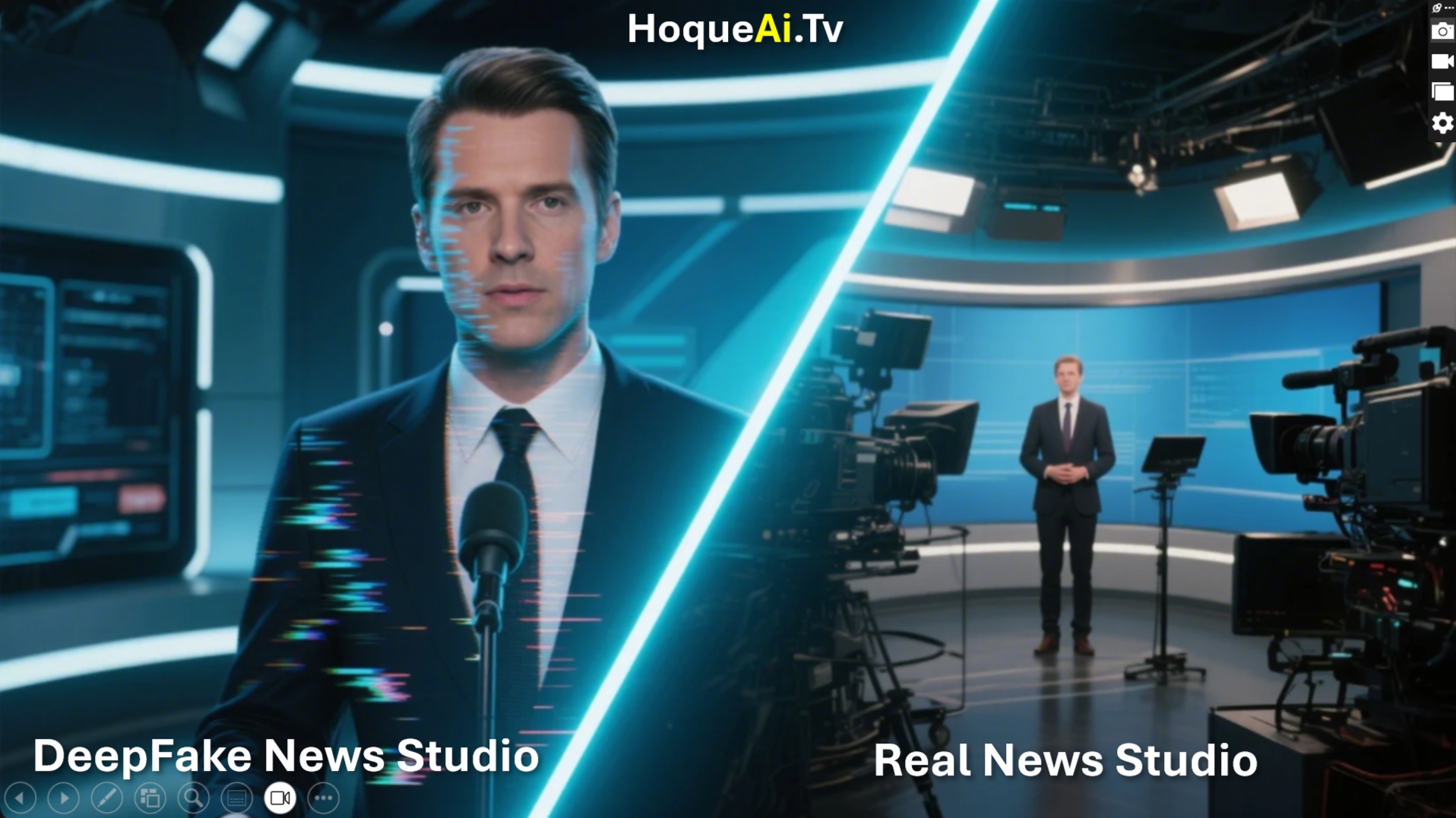
As digital content races across the globe in seconds, the integrity of video journalism faces an unprecedented challenge: AI-generated deepfakes that can make anyone appear to say or do anything. This article unpacks the growing threat of synthetic media and its potential to erode public trust, while also spotlighting the cutting-edge defenses taking shape. From blockchain tracking and advanced verification algorithms to new ethical standards championed by newsrooms and researchers, we explore how the industry is fighting back—and what’s at stake for the future of credible video news.
What Are Deepfakes?
Deepfakes are synthetic media generated using a subset of artificial intelligence known as deep learning. Typically using generative adversarial networks (GANs), these algorithms can produce hyper-realistic videos by swapping faces, mimicking voices, and replicating mannerisms. While initially entertaining—such as inserting celebrities into movie scenes—deepfakes have evolved into a potent tool for misinformation.
The sophistication of these videos has increased rapidly. From political figures giving fake speeches to fabricated “news footage” circulating on social media, deepfakes can now be indistinguishable from real videos to the untrained eye.
Impact on Journalism and News Media
For journalists and broadcasters, the implications are profound. Video content has historically been considered more trustworthy than text or static images. But with deepfakes muddying the waters, that trust is eroding. News organizations must now rigorously vet video sources, implement forensic tools to detect manipulation, and educate audiences on the possibility of fabricated content.
One of the most significant consequences is the threat to breaking news coverage. In a world of “publish fast, verify later,” even a single deepfake video can go viral and mislead millions before the truth surfaces.
Examples of Deepfake Misuse
- In 2018, a deepfake of Barack Obama emerged, warning about misinformation—but was itself a fabricated example designed to raise awareness.
- Deepfake videos have been used in political campaigns to discredit opponents, simulate scandalous behavior, or incite division.
- Manipulated celebrity videos have surfaced for malicious or exploitative purposes, often spreading faster than corrections can be issued.
These examples highlight just how easily public perception can be manipulated through forged video content.
How Newsrooms Are Fighting Back
Leading news organizations are beginning to invest in deepfake detection tools. These AI systems analyze videos for inconsistencies in lighting, facial expressions, eye movement, voice tone, and background noise to identify signs of manipulation.
Additionally, companies like Microsoft and Adobe are working on authentication tools such as:
- Content Credentials: Embedding metadata and edit history in images and videos to ensure provenance.
- Digital Watermarking: Adding invisible, tamper-proof identifiers in original content.
Fact-checking organizations, like Snopes and Reuters Fact Check, have also expanded their coverage to include deepfake verification and AI-generated media analysis.
The Role of Policy and Regulation
Governments around the world are waking up to the deepfake threat. Some countries have passed laws making the malicious creation and distribution of deepfakes illegal, especially when intended to influence elections or defame individuals.
However, policy struggles to keep pace with technology. Experts argue that a coordinated global response is necessary, including:
- International standards for AI media authentication
- Stronger platform moderation on social media
- Clear labeling of AI-generated content
Can Deepfakes Be Used for Good?
Interestingly, not all deepfake technology is malicious. In journalism, some outlets are experimenting with AI avatars to deliver personalized news. For instance, AI-generated anchors can present bulletins in multiple languages simultaneously, expanding global reach.
Filmmakers use similar tech to de-age actors or bring historical figures to life for documentaries. As with most technologies, the ethical boundaries depend on intent, context, and transparency.
The Future of News in a Deepfake World
As we move forward, the concept of “seeing is believing” must be re-evaluated. Video news will require robust layers of authentication—from source verification to technical audits. Journalists may need to become as skilled in data forensics as they are in storytelling.
Newsrooms that adopt AI responsibly, educate viewers, and maintain transparency will be better positioned to navigate this disruptive era. Collaboration between tech firms, journalists, educators, and regulators will be key.
What Viewers Can Do
Audiences also play a role in defending media authenticity. Here are a few tips:
- Question viral videos from unfamiliar sources.
- Use tools like InVID or FotoForensics to analyze content.
- Follow reputable fact-checking websites.
- Understand that AI can both help and hurt news integrity.
Conclusion
Deepfakes represent both a technological marvel and a journalistic nightmare. Their influence on news broadcasting will only grow more complex. To preserve public trust, the media industry must act with urgency—balancing innovation with responsibility. With vigilance, transparency, and collaboration, video news can continue to be a vital source of truth in the AI age.
Published by HoqueAI.tv — Your Source for Smart, Secure, and AI-Enhanced Video News