Election Coverage: The Role of Real-Time Video Updates
By HoqueAI.TV Editorial Team | August 2025
Introduction
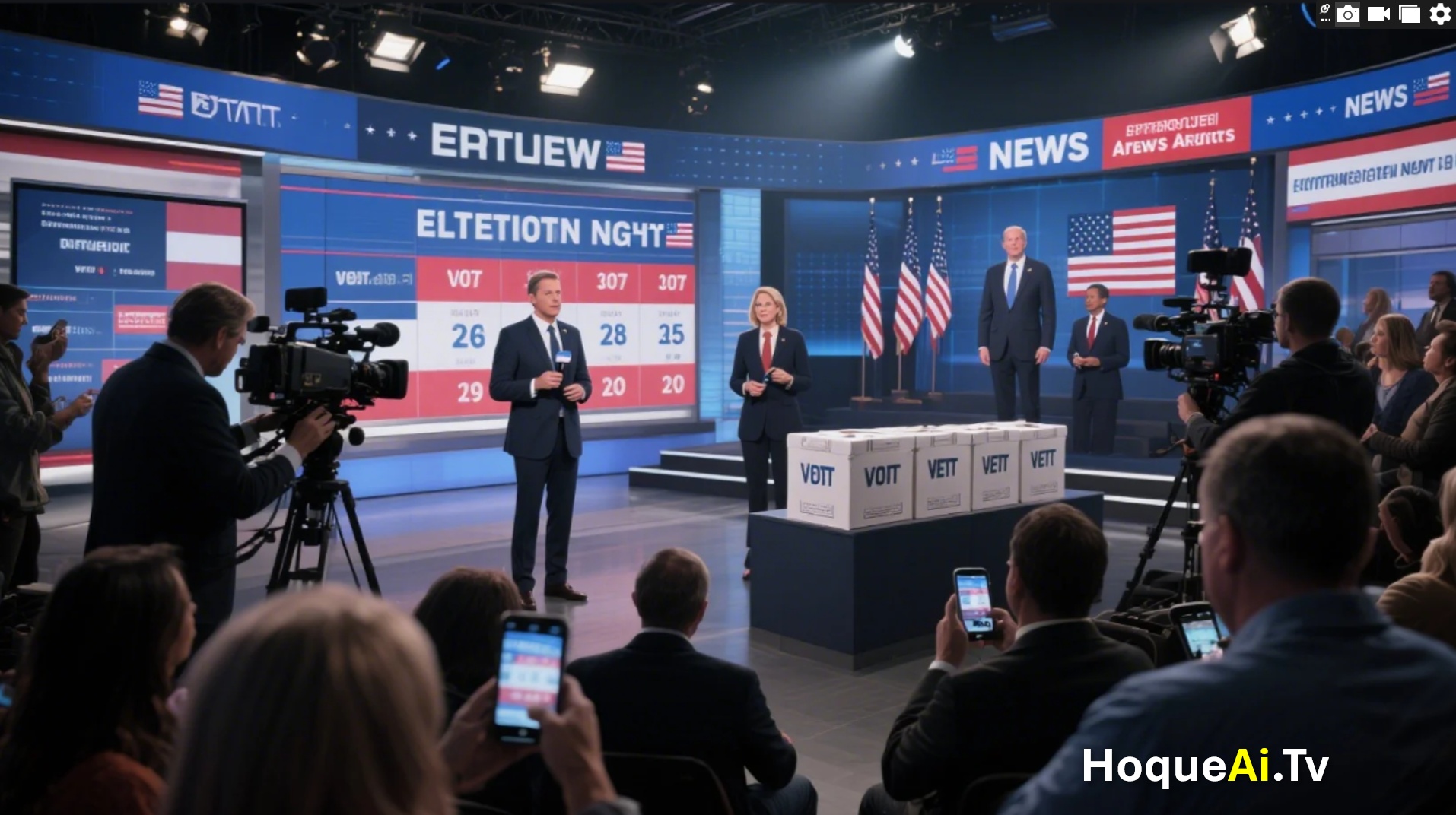
Election night has evolved from static broadcasts to an immersive, real-time experience—driven by livestreaming, mobile journalism, and AI-powered analytics. This article explores how modern election coverage harnesses instant video updates, interactive dashboards with live vote counts, and automated data overlays to deliver faster, clearer insights. From live political commentary to social media integration and viewer-driven engagement platforms, discover how technology is reshaping political journalism—making it more immediate, interactive, and impactful than ever before.
Real-time video updates have become a critical tool in the arsenal of modern journalism. From live town halls to minute-by-minute vote counting, this form of media enables journalists to deliver fast, unfiltered, and highly engaging content. The 2024 and 2025 election cycles across the world, including the U.S., India, Nigeria, and the EU, have demonstrated just how powerful—and sometimes controversial—this medium has become.
1. Why Real-Time Video Matters in Elections
Elections are high-stakes, fast-evolving events where credibility and speed can make or break public trust. Real-time video coverage provides transparency in the democratic process. Viewers can watch polling stations, hear direct speeches from candidates, and view live debates without the filter of post-production editing.
More importantly, live video puts control back into the hands of the public. Rather than rely solely on commentators or text-based summaries, viewers can see events unfold with their own eyes, including spontaneous reactions, crowd behavior, and on-the-ground insights.
2. Tools Powering Real-Time Election Coverage
Technologies such as 5G connectivity, drone cameras, and cloud-based broadcasting platforms (like StreamYard, OBS, and Restream) are enabling reporters to go live from virtually any location. Even local stations and citizen journalists now have the ability to livestream via YouTube, Twitter/X, Facebook Live, or Instagram.
Broadcast outlets are also investing in AI-powered video editing software that can detect key moments and instantly clip, caption, and redistribute them in real-time. This allows voters to engage with highlight moments without watching hours of footage.
3. Social Media Integration and Engagement
Election coverage is no longer confined to TV. Social media algorithms now prioritize live content, especially during key political moments. Platforms like TikTok and Twitter/X amplify live video feeds using trending hashtags, geotags, and community engagement tools.
For example, during the 2024 U.S. midterms, Twitter/X saw over 2 million interactions on live video coverage within a single day. These interactions weren't limited to passive viewing; they included live reactions, Q&A sessions with journalists, and even fact-checking in real-time.
4. Risks and Misinformation Challenges
While real-time video fosters transparency, it also opens the door to misinformation and manipulation. Deepfakes, misrepresented footage, or live streams taken out of context can have serious political consequences.
Platforms and broadcasters now use watermarking, fact-check overlays, and AI-moderation tools to counteract misinformation. Newsrooms often assign moderators to live streams to monitor comments and remove harmful or misleading interactions in real-time.
5. Citizen Journalism and Grassroots Coverage
One of the most transformative effects of real-time video is the rise of citizen journalism. Anyone with a smartphone can livestream political rallies, report on election day irregularities, or interview local candidates. This decentralized form of reporting can help cover smaller districts or marginalized communities that national networks might overlook.
However, unverified citizen video also presents challenges regarding bias, accuracy, and context. Major outlets now partner with citizen contributors while applying journalistic verification standards.
6. Real-Time Data + Video = Full Immersion
Real-time video is now being paired with live analytics dashboards, poll data visualizations, and expert commentary. This blended format—seen on networks like CNN and BBC—helps viewers better understand the significance of visual content.
For instance, during vote counts, a split-screen view might show the live tally while a commentator explains trends and projections. This style keeps audiences informed and emotionally engaged.
7. Behind the Scenes: Infrastructure and Ethics
Producing high-quality live election video requires robust infrastructure: on-ground field reporters, mobile data vans, backup satellite uplinks, and cloud storage solutions. Ethical considerations are also crucial—such as ensuring fair airtime for candidates, not broadcasting restricted areas like voting booths, and avoiding premature projections.
Many organizations now have election-specific editorial policies for live coverage, and training is provided to reporters to navigate legal and ethical minefields in real-time.
8. The Future: Interactive & AI-Enhanced Streams
The future of election video coverage lies in interactivity. Viewers may soon be able to control camera angles, submit questions live, or engage in immersive AR/VR election simulations. AI will further assist in real-time transcription, translation, emotion detection, and content tagging.
Some platforms are testing hyperlocal video feeds—e.g., toggling between national and regional live streams based on the user’s location and interest.
Conclusion
Real-time video updates have undeniably changed the game of election coverage. They create immediacy, build trust, and empower voters to witness democracy in action. However, with power comes responsibility. Journalists, tech companies, and audiences must work together to ensure the authenticity, accuracy, and safety of the content shared.
As the world heads into more contentious and complex election cycles, video journalism will continue to be a defining force in shaping public opinion—and the future of democracy.
Stay with HoqueAI.tv for verified, real-time election coverage from around the globe.