Behind the Scenes of Live Political Debates
By HoqueAI.TV Editorial Team | August 2025
Introduction
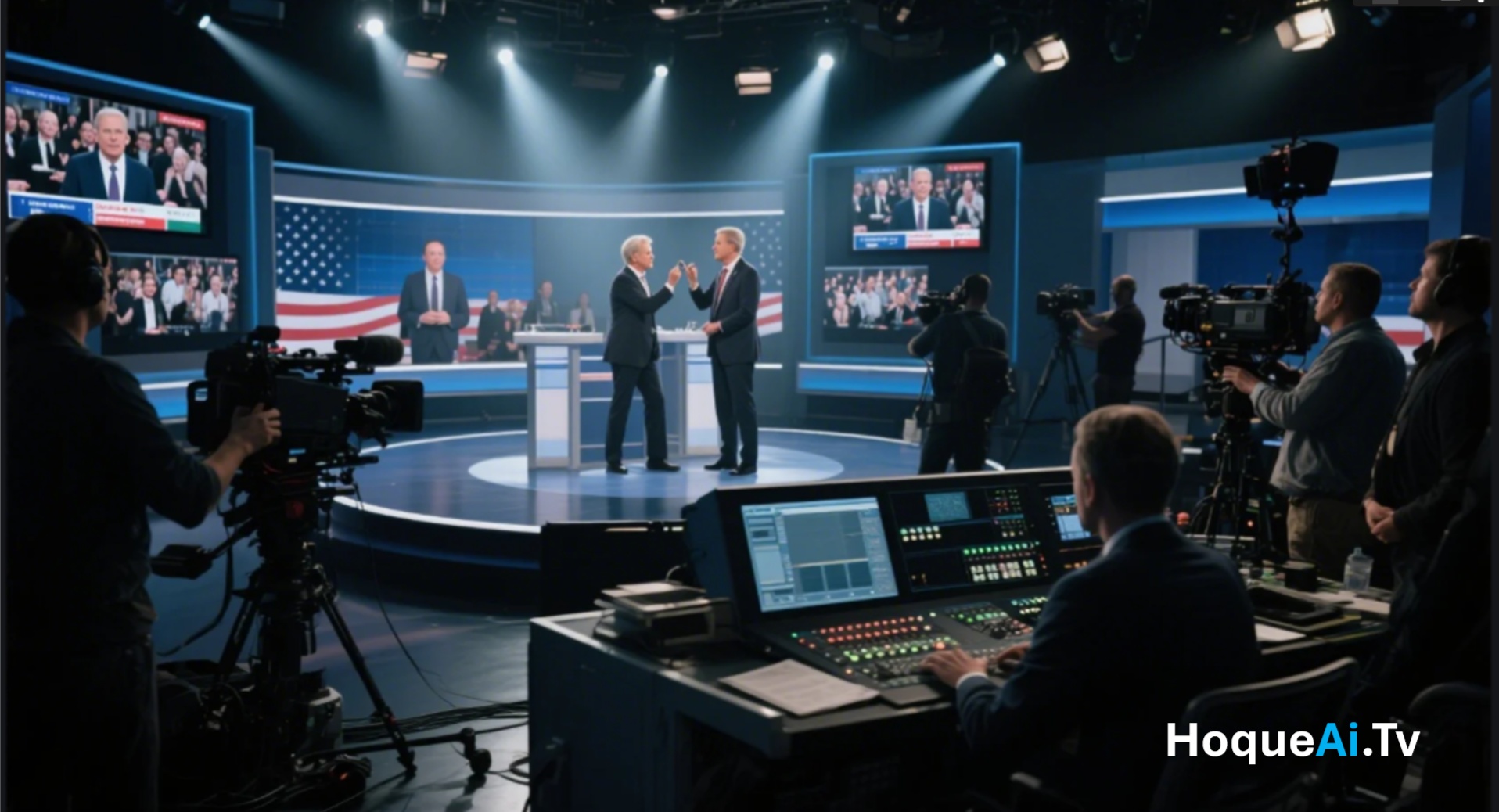
Live political debates are among the most anticipated media events in any democratic society. To the audience, debates appear seamless—moderators asking tough questions, candidates responding sharply, and viewers forming opinions. But what the camera doesn’t show is a bustling world of activity, pressure, and precision behind the scenes. This article takes you into that unseen world and explores the technology, logistics, human effort, and real-time decision-making that bring political debates to life.
1. Planning Months in Advance
Long before the debate begins, months of planning take place between broadcasters, political parties, moderators, and security personnel. Venues must be selected based on accessibility, seating capacity, media infrastructure, and neutrality. Broadcast teams collaborate with campaign staff to agree on debate rules, speaking time, candidate placement, and emergency protocols.
2. Stage Design and Lighting
Creating the perfect stage isn’t just about aesthetics—it’s about functionality. Lighting must evenly illuminate all participants without creating shadows or glare. Sound engineers test acoustics for clarity and tone balance. Camera angles are tested days before the debate.
3. Candidate Preparation Areas
Each candidate is provided with a green room—an area equipped with refreshments, advisors, makeup artists, and a monitor to review live feeds. Strategists review key talking points, rebuttals, and body language coaching before candidates go live.
4. Makeup and Wardrobe Teams
Makeup ensures that candidates look camera-ready under studio lighting. Wardrobe teams select clothing that reflects confidence while remaining neutral and professional.
5. Tech Booths and Broadcast Control Rooms
Dozens of professionals in the control room manage live audio, video, captions, and emergency broadcast systems. Producers coordinate cues and transitions with pinpoint precision.
6. Moderator Preparation
Moderators rehearse extensively and are briefed on the debate rules, timing, and handling off-topic or disruptive moments. They work closely with producers via in-ear monitors.
7. Audience Screening and Rules
If a live audience is allowed, attendees are screened for security and briefed on etiquette. Campaigns usually receive an equal share of available seats.
8. Security Protocols
Security involves coordination between local authorities and national security agencies. Backstage areas, entry points, and tech equipment are thoroughly monitored and secured.
9. AI and Real-Time Analytics
AI tools analyze sentiment, facial expressions, and audience engagement in real time. Networks sometimes display this data during or after the debate to show impact.
10. Live Fact-Checking Teams
Fact-checkers work in real-time during debates to verify claims and push accurate information to broadcasters and social media. These corrections are often included in post-debate coverage.
11. Post-Debate Spin Rooms
After the debate, campaign representatives meet with the press in “spin rooms” to deliver key messages and shape the narrative. This becomes a battle for headlines and social media impressions.
12. Digital Distribution and Social Media Teams
Social media managers clip key moments and monitor engagement on platforms like X, TikTok, and YouTube. Teams use hashtags and paid ads to ensure viral reach.
Conclusion
What the public sees during a live political debate is just the polished tip of a massive, intricate iceberg. Behind the scenes are hundreds of people—technicians, strategists, security officers, makeup artists, moderators, and data scientists—all working in sync to deliver a smooth, impactful broadcast.
In today’s hyperconnected world, the stakes of a live political debate are higher than ever. The technology, preparation, and real-time orchestration happening backstage not only support democracy but also shape the public’s understanding of leadership, truth, and trust.